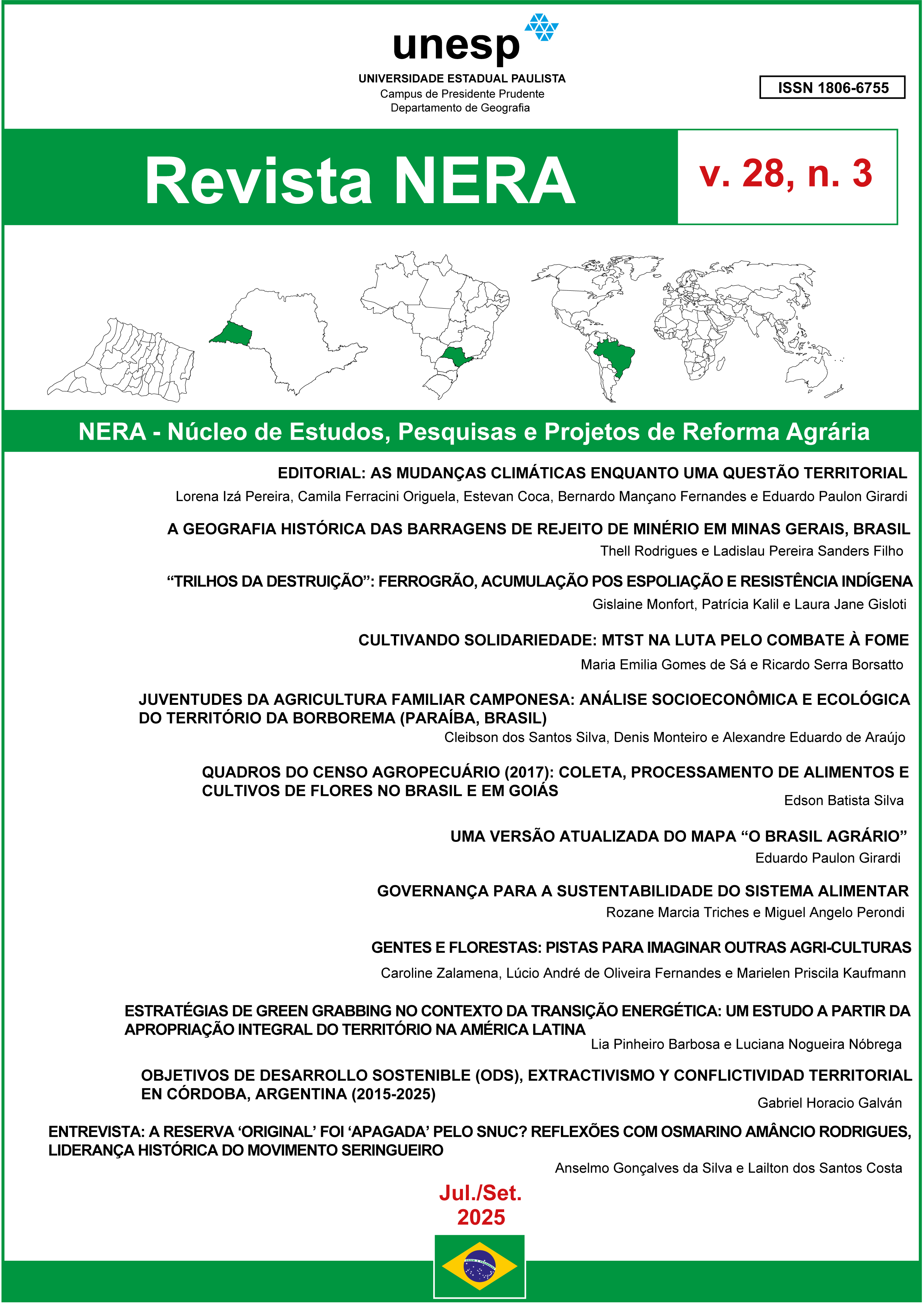
¿La Reserva Extractivista ‘original’ fue ‘borrada’ por el SNUC? Reflexiones con Osmarino Amâncio Rodrigues, líder histórico del movimiento seringueiro
Palabras clave:
Amazonía, autonomía, comunidades tradicionales, áreas protegidasResumen
El artículo presenta los resultados de un proceso de devolución reflexiva, realizado mediante una entrevista con Osmarino Amâncio Rodrigues, líder histórico del movimiento seringueiro. La investigación tuvo como objetivo tensionar los hallazgos de una revisión de literatura sobre las problemáticas institucionales de las Reservas Extractivistas (RESEX) tras su incorporación al Sistema Nacional de Unidades de Conservación de la Naturaleza (SNUC). Basada en el estudio de caso ampliado, la metodología incluyó lectura colectiva y discusión del artículo resultante de dicha revisión. Las reflexiones del entrevistado evidencian críticas al distanciamiento entre el modelo institucional vigente y la concepción original de las RESEX, sugiriendo impactos potenciales sobre la resiliencia socioecológica de estos territorios y, en consecuencia, sobre su capacidad de enfrentar el cambio climático.
Descargas
Descargas
Publicado
Número
Sección
Licencia
Derechos de autor 2025 REVISTA NERA

Esta obra está bajo una licencia internacional Creative Commons Atribución 4.0.
Os artigos publicados na Revista NERA devem seguir, obrigatoriamente, as diretrizes sobre ética e integridade na prática científica do Conselho Nacional de Desenvolvimento Científico e Tecnológico (CNPQ), disponíveis em seu sitio na internet (http://memoria.cnpq.br/normas/lei_po_085_11.htm). Em caso de infração às referidas diretrizes por qualquer texto publicado, o artigo será formalmente retirado de publicação, conforme a prática da comunidade científica internacional. A submissão de qualquer texto à Revista NERA implica na aceitação plena deste procedimento. As ideias e conceitos emitidos nos artigos são de inteira responsabilidade dos autores. Reforçamos que após a publicação do artigo o mesmo não será despublicado caso haja solicitação por parte dos(as) autores(as).
Lembramos que todos os manuscritos submetidos à Revista NERA são vereficados no software de similaridade "iThenticate". Os manuscritos com plágio verificado são automaticamente negados e os(as) autores(as) comunicados.
A licença utilizada pela Revista NERA é Creative Commons - Atribuição 4.0 Internacional (CCBY 4.0).
A política de arquivamento é a Licença LOCKSS.